I’ve been thinking a lot about teaching lately.
Maybe because I’ve been doing it for more than 10 years.
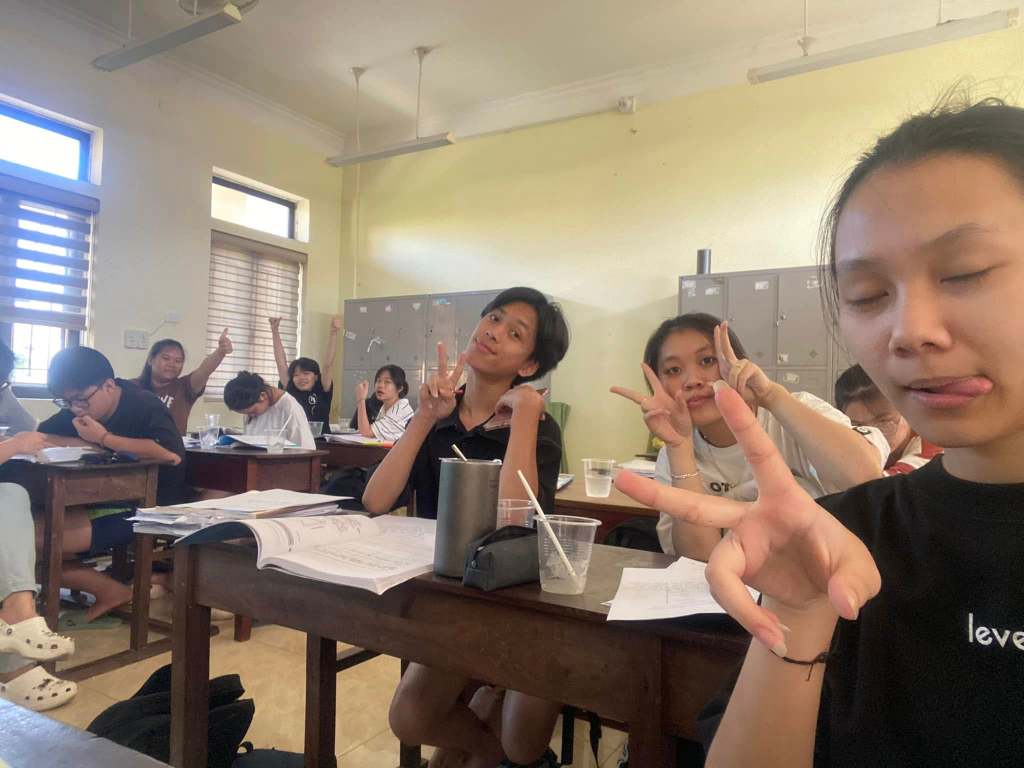
Or maybe because now I’m sitting in classrooms again, but on the other side, as a student.
And when you experience both sides at the same time, you start noticing things you didn’t see before.
Small things.
But also very important ones.
There are questions I’ve carried with me for a long time:
Viết cho ai? Viết để làm gì? Viết như thế nào?
“Write for whom? For what purpose? How to write?
I’ve always felt that those questions were not just for writing. They are really … about Communication.
And teaching, as its core, is communication.
People often believe something very simple: If you know something well, you can teach it well.
But I never agreed with that.
Because I’ve seen people who know so much, who are clearly intelligent, experienced, passionate … yet students leave confused.
Not because the content is too hard. But because something didn’t reach them.
Sometimes I sit in class and I can feel how much the professor cares.
They speak with passion.
They explain everything.
They add stories, experiences, extra insights.
They emphasize words: NOT, CAUTION, IMPORTANT like everything needs attention.
And slowly, everything becomes ….equally important.
Which means nothing really is.
At some point, I stop trying to follow every word. And I ask myself something very simple: What am I supposed to understand from this?
And I can’t answer.
I don’t think the problem is passion.
In fact, I respect it. I think the problem is when passion is not guided by clarity.
Because when someone speaks continuously, adding more and more information, without deciding what truly matters…
the lesson loses direction.
It becomes full, …..but empty at the same time.
That’s when I come back to those three questions again.
1. Who Are We Speaking To?
Most teaching fails here.
Because students are not at the same levels as the teacher.
They don’t see things the same way.
They don’t organize knowledge the same way.
If we don’t adjust to them, we’re not really communicating. We’re just talking.
2.Why are we teaching this?
What is the purpose of this lesson?
Not everything deserves equal attention.
But sometimes, everything is presented like it does. And when everything is highlighted, explained, emphasized…. students leave without knowing what to hold onto.
3.And then the last question: How are we delivering it?
This one feels the most honest because even if the knowledge is correct, even if the intention is good ….if the delivery is unclear, understanding doesn’t happen.
I’ve also been thinking about something else. In a classroom, it’s not just the teacher who wants to be heard. Students do too! They want to speak, respond, be seen, be part of the lesson.
But when a class becomes a continuous flow of explanation, there’s no space left for them.
And without that space, learning feels distant.
Ok. Wait here. I know what you’re asking. How, right? Or “I let them time to discuss but none of them said a word.” I feel the pain you’re going through and I may have another post about teaching skill. But back to what I’m sharing now, again, this’s why ideas like student-centered learning, or even the flipped classroom, make so much sense to me. This blog today is not about teaching skill or teaching method, we might go deeper on another beautiful day.
Not because Student-centered Learning or The Flipped Classroom are trend, but because they recognize something simple: Understanding doesn’t come from listening longer. It comes from engaging. From thinking. From trying. From sometimes getting it wrong.
After all these years of teaching, I think I’ve learned something very simple: Teaching is not about saying more. It’s about helping someone understand … something. Just one thing. Clearly enough that they can remember it, and maybe even explain it to someone else.
And maybe that’s the only thing that really matters.
not how passionate the teacher sounded.
Not how much knowledge was shared.
But whether, at the end of the lesson,
something stayed.
And this is where I think we don’t talk enough about something uncomfortable: Class management is communication.
Not in the sense of discipline. But in the sense of protecting attention.
A classroom is a compressed space.
One hour is not long. It is extremely short.
Every minute matters. Every word matters.
So when 10 – 15 minutes are spent explaining how the lesson will be structured, or how the professor prepared, or background that doesn’t directly support understanding, that’s not neutral. That is lost learning time. And in a compressed environment like a classroom…. that’s a failure.
We do need to clarify between core value and add-on value when it comes to scarced time for a class. What is the complicated terminologies/ concepts that students hope the teacher make it easier for them to grab? What is the thing they can absolutely find by themselves?
I’ve learned this the hard way from teaching. Sometimes students ask questions that are interesting, thoughtful, but not relevant to the core idea, and if we follow every question, we lose the lesson.
So we have to gently redirect. Not ignore them. But guide them back.
“That’s a good question. Let’s come back to it later. Right now, I want to focus on this idea first.”
Because if we don’t protect the core,
everything becomes noise.
Teaching requires decisions like that constantly.
What to include. What to cut. What to pause. What to redirect.
It’s not just knowledge.
It’s intentional communication
If before every lesson, we paused and asked:
Who am I speaking to?
Why am I saying this?
And am I saying it in a way they can understand?
And maybe one more question: Is this necessary … or just extra?
Maybe classrooms would feel different.
Sharper.
Clearer.
More intentional.






 Heidi Ahihi
Leave a comment