There are Vietnamese sentences that sound completely ordinary until you leave Vietnam.
Ăn cơm chưa?
Have you eaten?
Hôm nay ăn gì?
What are you eating today?
Sao giờ này chưa ăn?
Why haven’t you eaten yet?
Về nhà ăn cơm không?
Are you coming home for dinner?
We ask these questions so casually that we barely notice what we are really saying.
We are not always asking about food.
Sometimes we are saying:
I was thinking about you.
Are you okay?
Are you taking care of yourself?
Come home.
And sometimes, very simply:
I love you.
That is something I didn’t fully understand until I lived between cultures.
Cơm nhà is not just food
Literally, cơm nhà means something close to “food at home” or “a meal at home.”
But translating it that way loses almost everything.
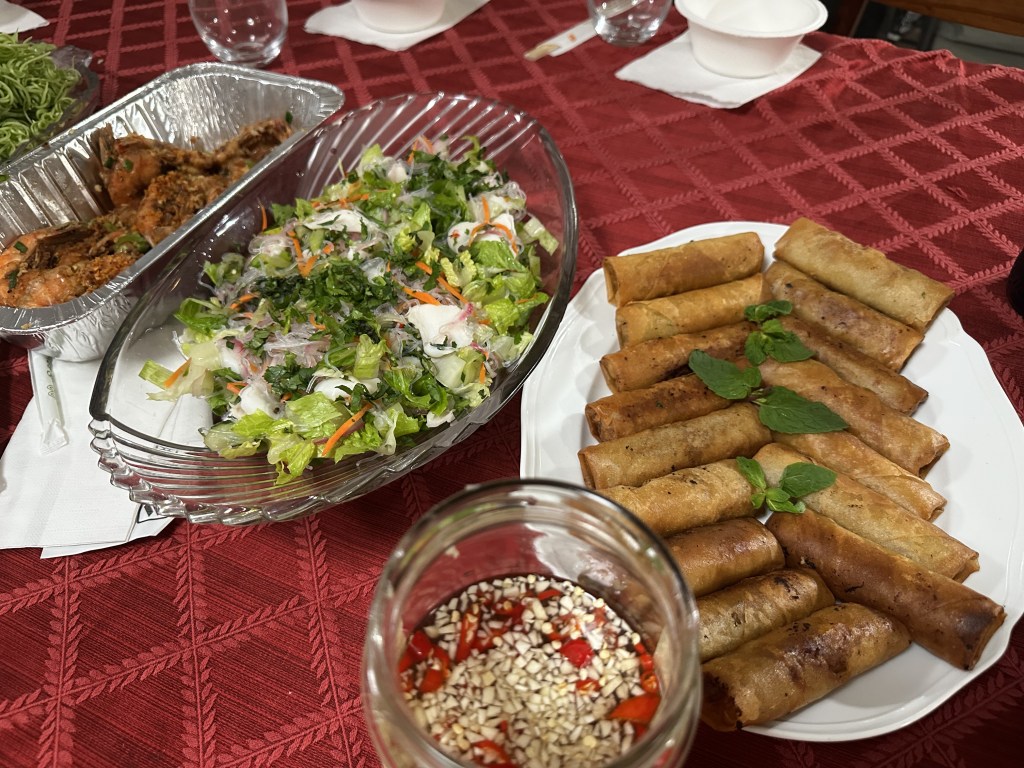
Cơm nhà is rice steaming in the cooker while somebody is still on their way home.
It is several dishes placed in the middle of the table rather than one individual plate for each person.
It is someone noticing that you haven’t touched the fish and putting a piece into your bowl.
It is your mother saying she isn’t hungry and then sitting there watching everybody else eat.
It is somebody asking what time you will be home because they need to know when to start cooking.
It is arguing at the table and still asking ten minutes later:
Ăn thêm không?
Want some more?
Researchers studying food practices in Vietnam have found something remarkably similar to what many Vietnamese people intuitively know: home-cooked family meals are valued not merely for nutrition or cost, but as a symbol of family togetherness. In one study, Vietnamese mothers specifically described preparing good food at home as something that brings family members back home.
That distinction matters.
Because cơm nhà isn’t simply something a family consumes.
It is something a family does.
A family is built around a table
Traditional Vietnamese family life has long emphasized interdependence and family obligation. Children receive care from parents; as parents age, care travels in the other direction. Helping the family is not necessarily considered an extraordinary act of generosity. It can simply be part of what belonging to a family means.
Research in contemporary Vietnam still finds strong family-obligation values even as the country urbanizes, although the ways younger generations express those obligations are changing.
Even the idea of filial piety is more complicated than the stereotype of obedient Asian children doing whatever their parents demand. Researchers distinguish between obligation based primarily on hierarchy and obedience and a more reciprocal form that develops through affection, intimacy, and years of caring for one another. Research in Vietnam suggests that this reciprocal form is particularly important.
That reciprocity is hidden everywhere in cơm nhà.
Today my mother feeds me.
One day I may feed her.
Today somebody waits for me to come home before eating.
Tomorrow I may be the person waiting.
Care moves around the table.
And then I came to America
This is where something became confusing.
Sometimes what feels like care to me can feel like interference to someone else.
And what someone else considers respectful can initially feel strangely like indifference to me.
Imagine someone you love saying:
“I haven’t eaten all day.”
My Vietnamese instinct is almost immediate:
Why? What happened? What are you going to eat? Do you want me to make something?
Maybe I start looking in the refrigerator before you’ve even answered me.
To me, I am caring for you.
But another person might think:
I’m an adult. If I’m hungry, I’ll eat.
And if they told me they hadn’t eaten, perhaps they weren’t asking me to solve anything at all.
This difference extends far beyond dinner.
Vietnamese-style caring can involve asking:
Where are you?
When are you coming home?
Did you eat?
Did you bring a jacket?
Why are you working so late?
Do you have enough money?
Are you sick?
Did you take medicine?
To someone raised with it, those questions can create a feeling of being held inside a network of people who are paying attention.
To someone raised differently, the exact same questions can feel invasive.
And suddenly two people can love each other while each quietly wonders why the other person doesn’t know how to care.
Maybe neither person is uncaring
Cross-cultural psychology gives us useful language here.
American culture tends to emphasize a more independent model of the self: a person is understood as an autonomous individual with preferences, boundaries, choices, and responsibility for their own life.
Many Asian cultural contexts place relatively greater emphasis on an interdependent model: the self also exists through relationships, roles, obligations, and responsiveness to other people.
These are broad cultural tendencies, not personality tests. There are fiercely independent Vietnamese families and intensely involved American families. Culture changes across generations, regions, class, migration, and individual households.
But the distinction helps explain something I kept experiencing.
Sometimes:
“I care about you” means “Let me help you.”
And sometimes:
“I care about you” means “I trust you to handle it, and I won’t interfere unless you ask.”
The first can look controlling from the outside.
The second can look cold from the outside.
Neither interpretation necessarily tells us how much love is actually there.
Food makes the difference especially visible
There is a reason I keep coming back to food.
Research on Vietnamese caregiving has described food and feeding as having both practical and symbolic importance. Preparing and offering food can become a way through which care itself is communicated.
That makes perfect sense to me.
Vietnamese families don’t necessarily sit around announcing:
“I would like to provide you with emotional reassurance today.”
We cut fruit.
We cook cháo when somebody is sick.
We bring food over.
We ask whether you ate.
We complain that you’re too skinny.
Then sometimes we complain that you’re getting fat.
Yes, our love language can become internally inconsistent. 😂
But underneath all of that fussing is attention.
I noticed you.
That’s the part that matters.
But care can become control
I don’t want to romanticize this either.
There is a shadow side to involvement.
“Did you eat?” can be affection.
“Where are you?” can be concern.
“What time are you coming home?” can mean somebody is waiting for you.
But constant questioning can also become surveillance.
Helping can become deciding.
Sacrifice can become guilt:
After everything I’ve done for you…
Family obligation can become a reason an individual isn’t allowed to have boundaries at all.
And that’s where simply saying “it’s our culture” stops being enough.
A loving intention does not automatically create a loving experience for the person receiving it.
The challenge is learning the difference between:
I am here if you need me
and
I need to manage you in order to feel that I am caring for you.
Those aren’t the same thing.
And independence can become distance
The opposite extreme has its own problem.
Respecting someone’s autonomy shouldn’t require pretending we don’t notice them.
There is a difference between:
I trust you to take care of yourself
and
Your problems aren’t my responsibility.
There is a difference between giving someone space and emotionally disappearing.
Perhaps this is why living between cultures has made me think differently about both.
I don’t want love that controls every part of my life.
But I also don’t want a version of independence in which everybody politely stays out of everybody else’s life until somebody explicitly submits a request for assistance.
Sometimes I want someone to ask.
Sometimes I want someone to notice.
Sometimes I want someone to say:
Have you eaten?
Not because I am incapable of feeding myself.
Because they were thinking about whether I had.
Maybe love needs translation
We talk constantly about cultural differences in language.
We talk much less about cultural differences in care.
But care has grammar too.
One person cooks.
One person asks questions.
One person gives advice.
One person gives space.
One person fixes the problem without being asked.
Another deliberately doesn’t fix it because they believe doing so would disrespect your independence.
And then we judge each other using our own dictionary.
If you loved me, you would ask.
If you loved me, you would trust me.
If you cared, you would help.
If you cared, you wouldn’t interfere.
Maybe some relationships don’t suffer from a lack of care.
Maybe the care is simply arriving in a language the other person doesn’t immediately recognize.
So what does cơm nhà mean to me now?
It still means food.
Of course it does.
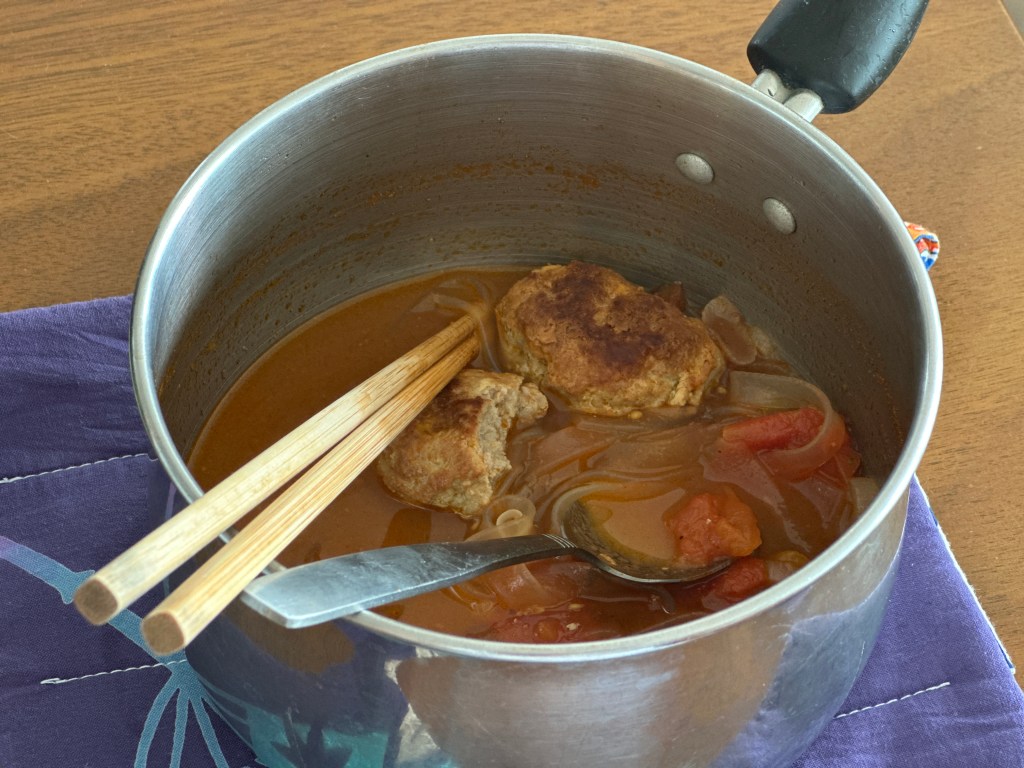
Rice. Soup. Fish. Vegetables. Whatever somebody found at the market that day.
But after living away from Vietnam, cơm nhà means something larger to me.
It is the idea that another person’s ordinary needs are allowed to enter your consciousness.
Their hunger matters to you.
Their arrival matters.
Their absence from the table is noticeable.
There is a place where somebody expects them to return.
Maybe that is why cơm nhà is so difficult to translate.
Because the closest English translation isn’t really home-cooked food.
Maybe it is:
There is food here because we knew you would come home.
And somewhere inside that sentence is an entire Vietnamese philosophy of love.






Leave a comment